1. Introduction and objectives
The lecture at the University of Krems provided comprehensive insights into the design of adaptable organizations that have to survive in highly dynamic markets. A practical example was used to illustrate how theoretical models from organizational development can be applied in real corporate structures. The focus was on combining flexibility and agility with a sustainable leadership culture in order to reconcile both short-term market requirements and long-term corporate goals.
2. Market environment and initial situation
The market environment under consideration is characterized by a number of challenges: global competition, rapid innovation, changing customer requirements, and a complex project landscape. Competition is particularly intense in the area of customer-specific software development, as there are hardly any market niches. In some cases, customers also act as competitors, which makes cooperation and strategic alignment even more difficult. These factors require organizations to be highly adaptable and able to operate reliably even under uncertain conditions.
3. Theoretical foundations
The models presented in the lecture form the basis for organizational alignment:
4 Quadrant Analysis:
The model describes people and organizations holistically. It distinguishes between individual and collective aspects, as well as between an inner, subjective level and an outer, visible level. The inner individual level includes attitude, thoughts, feelings, and body awareness. The external individual level encompasses behavior, knowledge, skills, and the body. The internal collective level is about culture, a sense of unity, shared values, and the quality of relationships. The external collective level concerns structures, products, processes, and infrastructure. All four levels interact with each other and together shape the experiences and actions of people and groups.
These two principles above are only known in the software development domain but valid for almost all other business domains as well, especially if those domain drive in the dricetion of digitalization
4. Agile implementation and organizational model
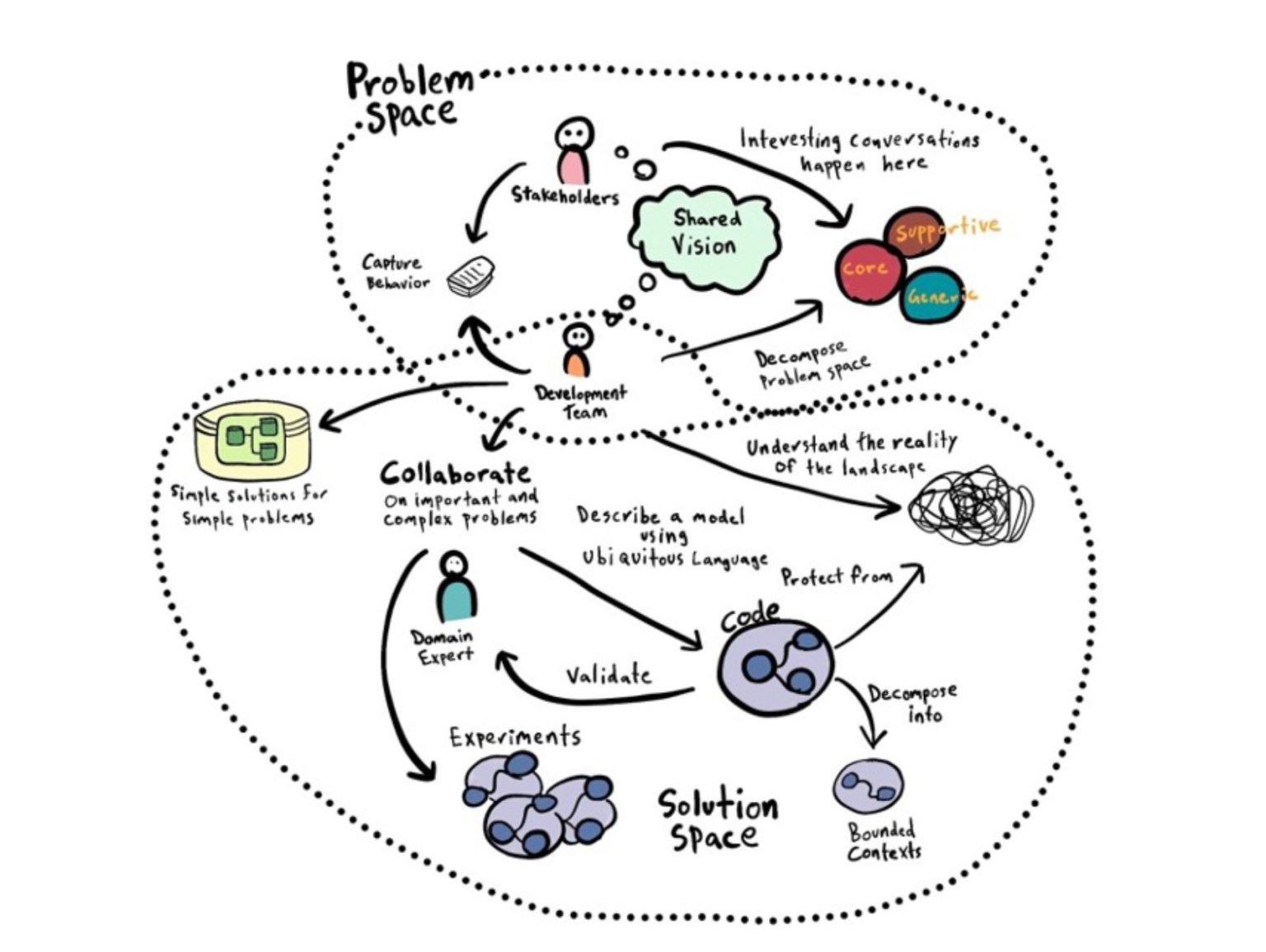
The organizational model presented in the is based on a clearly project-oriented structure. The company is understood as a platform that efficiently supports projects. Key elements are:
• Role-based task allocation with clear responsibilities.
• Project definition that includes at least one specific customer problem, a coordinated schedule, and a clear action plan.
• Adaptation of processes to the respective project size and complexity (from small projects to very large projects).
• Use of the Inno-Tec Project Lifecycle (ITPL) as a framework process that maps all phases from kick-off to delivery.
• Use of Scrum methods for continuous improvement and close collaboration between teams and customers.
5. Leadership and responsibilities
A key element of organizational design is a leadership culture based on role modeling, trust, and support. Managers should not primarily focus on control, but rather on creating conditions in which employees can work independently. Responsibilities are clearly assigned: O/F/T managers (organizational, functional, technical responsibility) distributed among 1-3 employees bear overall responsibility for a project in the so-called core team, while project cluster leaders (PCLs) bundle several projects and manage them strategically.
Responsibillity is a separate entity it should never be bundeled to a project role or to a profession. It is important to take over responsibility if you are willing an able to. Not because of your profession or current position in a company.
6. Personal responsibility and human resources strategy
Personal responsibility is considered a key success factor. It arises in an environment that views mistakes as learning opportunities while also providing clear structures. The HR strategy focuses on employees who can fulfill multiple roles (multi-role) and have comprehensive technical and organizational skills (full stack). If necessary, external specialists are brought in for highly specialized tasks. Mental skills, peoples mindset and behaviour are much more important then technical skills. See 4 quadrant. An enthusiastic employee can always be upskilled but an unmotivated one is very hard to motivate.
7. Controlling and freedom to make decisions
A transparent system of key performance indicators (KPIs) enables teams to make decisions independently and monitor project progress on an ongoing basis. Intervention by central controlling is only necessary if deviations or problems arise. This creates a balance between self-organization and central control.
8. Toolchain and digitization
The digital infrastructure provides crucial support for agile working methods. Confluence is used as a central knowledge platform, while Jira enables project management, task allocation, and progress monitoring. Individually developed plugins such as Inno-Tec CoPilot extend functionality and adapt the systems to specific requirements.
9. Applicability to other industries
A case study showed how the principles described can also be implemented in other industries. Using the example of a carpentry workshop, it became clear that agile structures and clear responsibilities can also lead to increased efficiency and greater adaptability in craft-based environments. Allmost all craft based companies have 80-90 % the same domain entities and issues.
10. Conclusion
Sustainable success in complex markets is based on a combination of clear structures, agile methods, a culture of learning from mistakes, and a powerful digital infrastructure. These principles can be applied across all industries to all service-oriented (manufacturing) companies, provided they are adapted to the respective framework conditions.